

What the Law Says: Your Right to Medical Care Does Not Depend on Your Immigration Papers
Key Takeaways: Yes, undocumented construction workers in California can receive workers’ compensation. California law extends benefits regardless of citizenship or immigration status, rooted in the Labor Code’s broad definition of "employee" and reinforced by Labor Code § 4756, which the Legislature declared declaratory of existing law. Nearly every employer must carry no-fault workers’ comp insurance, so injured workers need not prove fault or reveal immigration status to qualify. Benefits include medical treatment, temporary and permanent disability, and job displacement assistance. Employers often misclassify workers as independent contractors or make immigration-related threats, both unlawful tactics. Workers must generally report injuries within 30 days and file claims within one year, even if they leave California.
Yes, undocumented construction workers can absolutely receive workers’ compensation in California. If you were seriously hurt on a San Bernardino job site, your immigration status does not erase your right to medical treatment and wage replacement.
California Labor Code § 4756 includes provisions declaring it is in the state’s interest to provide benefits and, in subsection (b), states that a person shall not be prohibited from receiving compensation paid or payable from the Subsequent Injuries Benefits Trust Fund solely because of his or her citizenship or immigration status.
For workers facing a life-altering fall, crushed limb, or spinal injury, this protection can mean the difference between recovery and financial ruin.
If you or a loved one suffered a catastrophic construction injury, do not wait to act. The attorneys at Kampf, Schiavone & Associates are ready to fight for the care and compensation you deserve. Call (909) 885-1522 today or contact us now to discuss your options.
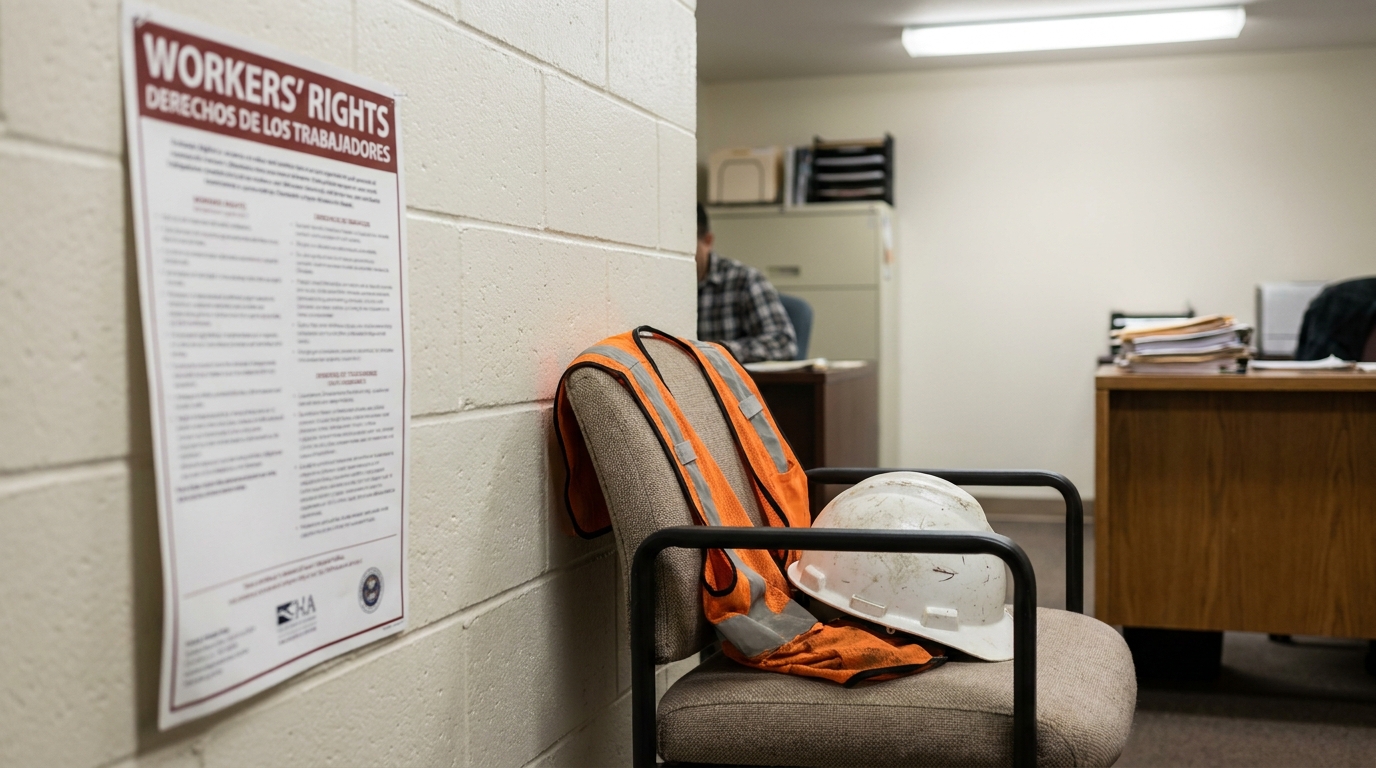
California Protects Workers Regardless of Immigration Status
California law goes further than most states in shielding immigrant workers who suffer on-the-job harm. This is not a loophole, it is written directly into the Labor Code and reinforced by state enforcement agencies.
The state’s enforcement arm recently reaffirmed this protection publicly.
The Labor Commissioner reminds all workers that California’s labor laws protect every worker in the state, regardless of immigration status.
You can read more in the official Labor Commissioner announcement on worker rights, which underscores how seriously California treats these safeguards.
The Legislature also made clear this is nothing new.
California Labor Code § 4756(d) states that the provisions of this section are declaratory of existing law.
In plain terms, undocumented workers were never lawfully excluded from these benefits in California.
💡 Pro Tip: Keep copies of your pay stubs, text messages with supervisors, and any record showing you worked at the site. Documentation of your employment relationship is often more important than questions about immigration status.
What the Law Says About Construction Accident Workers Comp California
Coverage in a construction accident workers comp California claim begins with one simple rule: nearly every employer must carry insurance.
Every employer in California, even those with just one employee, must carry workers’ compensation insurance. This is not optional.
This requirement does not pause based on a worker’s documentation.
No-Fault Coverage Means No Blame Required
You do not have to prove your employer did anything wrong to qualify for benefits.
California workers’ comp creates a no-fault insurance system, meaning if you are hurt because of your job, you can get benefits without proving anyone was at fault.
This is especially important on construction sites, where scaffolding collapses, forklift incidents, and falls from heights can cause permanent disability in seconds. The focus is on whether the injury arose out of and in the course of your work.
The duty to insure applies broadly across the state.
All California employers must provide workers’ compensation benefits under California Labor Code Section 3700, and if a business employs one or more employees, it must satisfy this requirement.
The statutory text contains no carve-out based on immigration status, which is why immigrant worker injury rights claims can proceed even when employers resist.
Common Tactics Used to Deny Injured Construction Workers
Some employers and insurers use predictable strategies to discourage undocumented construction worker benefits. Recognizing these tactics early can protect your claim. The most common involve misclassification, missing notices, and intimidation.
Misclassification as Independent Contractors
One frequent tactic is labeling a worker an independent contractor instead of an employee. California has pushed back through statutes governing the construction industry.
California Labor Code § 2750.5 creates a rebuttable presumption that a worker performing services for which a contractor’s license is required is an employee rather than an independent contractor.
That presumption of employee status can unlock coverage for misclassified, injured workers.
Intimidation and Immigration-Related Threats
Threats about immigration status are not just unethical; they are unlawful retaliation.
Employers cannot refuse to honor documents that appear genuine, misuse E-Verify, threaten to call immigration authorities, or report you or your family’s perceived immigration status in retaliation for exercising your rights.
If you experienced this, you have options under California labor law for undocumented workers.
The state also shields your privacy during the claims process.
Workers who file wage claims or exercise other rights are not required to disclose their immigration status, and the Labor Commissioner’s Office will not inquire about immigration status.
If you want a deeper overview of these protections, our discussion of undocumented workers comp California explains how status-neutral the system truly is.
💡 Pro Tip: If a supervisor threatens to report you for filing a claim, write down the date, time, and exact words used. That record can support a separate retaliation complaint.
Workplace Notice Rights That Protect Spanish-Speaking Workers
California requires covered employers to post clear notices explaining your rights.
California Labor Code § 3550(d) requires that the notice be posted in both English and Spanish where there are Spanish-speaking employees, and it must include that the injured employee may consult a licensed attorney.
In San Bernardino and the broader Inland Empire, where many construction crews are Spanish-speaking, this bilingual requirement is significant.
When an employer fails to post that notice, the law shifts power back to the worker.
California Labor Code § 3550(e) provides that failure to provide the required notice shall automatically permit the employee to be treated by their personal physician with respect to an injury occurring during that failure.
This can open the door to care from a trusted doctor rather than one chosen by the insurer.
Benefits Available After a Serious Construction Injury
Workers’ compensation provides several categories of benefits, which matter most when an injury is severe and lasting. The system addresses both immediate medical needs and the long-term loss of earning capacity following a catastrophic accident. The table below outlines the core categories generally available.
| Benefit Type | General Purpose |
|---|---|
| Medical treatment | Covers care reasonably required to cure or relieve the injury |
| Temporary disability | Replaces a portion of wages while you recover |
| Permanent disability | Compensates for lasting impairment or loss of function |
| Supplemental job displacement | May assist when you cannot return to prior work |
These benefits carry real weight for workers facing permanent harm. A spinal fracture, traumatic brain injury, or amputation from a scaffolding collapse can permanently reduce your ability to earn a living. Because the stakes are high, building a thorough medical record and credible witness support is critical, and an experienced San Bernardino workers comp attorney can help document the full scope of your losses.
💡 Pro Tip: Ask every treating provider to clearly note in your chart how the injury happened at work. Vague records are one of the most common reasons serious claims face unnecessary disputes.
Deadlines and Reporting Rules You Cannot Ignore
Timing can make or break even the strongest construction accident workers comp California claim. California imposes specific reporting and filing windows, and courts generally interpret exceptions narrowly. Acting quickly protects your right to benefits.
Two key deadlines apply in many cases.
You should report your injury to your employer within 30 days, and you must generally file your formal claim within one year.
These workers’ compensation deadlines are separate from civil lawsuit timelines, and missing them may jeopardize benefits, though limited exceptions can apply. Because tolling and discovery exceptions do not apply automatically, never assume a late claim will be excused.
Distance does not have to end your claim.
You can still file a claim even if you leave California or the United States, and you can contact the Labor Commissioner’s Office by calling 833-526-4636, or online.
This flexibility can be vital for workers who feel pressured to leave the area after a serious injury.
Frequently Asked Questions
1. Can I be denied workers’ comp because I am undocumented?
No.
California Labor Code § 4756(b) provides that a person shall not be prohibited from receiving compensation paid or payable from the Subsequent Injuries Benefits Trust Fund solely because of his or her citizenship or immigration status.
California treats undocumented workers as covered "employees," so eligibility turns on your employment and injury, not your documentation.
2. Do I have to reveal my immigration status to file a claim?
Generally, no. The Labor Commissioner’s Office will not inquire about immigration status for workers seeking protection. The focus stays on your work-related injury and your right to care.
3. What if my employer says I was an independent contractor?
That label is not the final word. California’s construction classification rules under California Labor Code § 2750.5 ensure construction workers are properly classified as employees. Whether you qualify depends on the facts of your working relationship.
4. What if my employer threatens to call immigration authorities?
That conduct may be unlawful retaliation. Immigration-related threats made in response to exercising your rights are prohibited. You may have grounds for a separate complaint in addition to your injury claim.
5. How quickly should I act after a serious injury?
As soon as possible. Because the 30-day reporting rule and one-year filing rule apply in many cases, prompt action helps preserve your benefits and medical evidence.
Standing Up for Injured Construction Workers in the Inland Empire
Your immigration status does not strip you of the right to heal and recover after a devastating workplace injury. California law protects workers regardless of status, mandates insurance for nearly every employer, and punishes those who use intimidation or misclassification to deny legitimate claims.
You do not have to face the insurance company alone. The team at Kampf, Schiavone & Associates is recognized for handling serious, life-altering injury cases and is ready to advocate fiercely for the medical care and wage replacement you need. Call (909) 885-1522 now or reach out through our secure contact page to take the next step toward protecting your rights and your recovery.