

When a San Bernardino Emergency Room Misses the Signs of Sepsis
Key Takeaways: Emergency room sepsis misdiagnosis occurs when ER staff fail to recognize, test for, or promptly treat a life-threatening infection response, and under California malpractice law it may become actionable when a provider falls below the professional standard of care and that failure is a substantial factor in causing harm or death. Sepsis is frequently missed because its symptoms mimic dehydration, the flu, or intoxication, and charts often reveal unreassessed vital signs, missing lab work, or delayed antibiotics. Claims are generally decided under CACI No. 500, with causation often the central battleground and retained emergency medicine, infectious disease, and critical care physicians reconstructing what earlier treatment might have accomplished. Strict deadlines apply, including the three-year/one-year filing rule and a 90-day pre-suit notice, with a six-month government claim deadline generally applying for public hospitals. MICRA caps noneconomic damages in separate categories, with amounts depending on the date of injury and increasing annually under 2022 legislation, though economic damages such as lifetime care and lost earnings are not capped. Limited emergency care immunity generally does not shield routine ER negligence occurring outside a proclaimed emergency.
Emergency room sepsis misdiagnosis happens when ER staff fail to recognize, test for, or treat a body-wide infection response that is rapidly shutting down a patient’s organs. Under California malpractice law, that failure may become actionable when a plaintiff shows the provider fell below the accepted standard of care and that this was a substantial factor in causing serious harm or death. Sepsis moves fast, a delay of hours can mean the difference between full recovery and amputation, organ damage, brain injury, or death.
If your family is living with the aftermath of a missed infection diagnosis, the team at Kampf, Schiavone & Associates is ready to review what happened. Call (909) 885-1522 or reach out to our team now to discuss your situation with a firm that handles catastrophic, life-altering medical negligence claims.
Why Sepsis Is So Often Missed in the Emergency Department
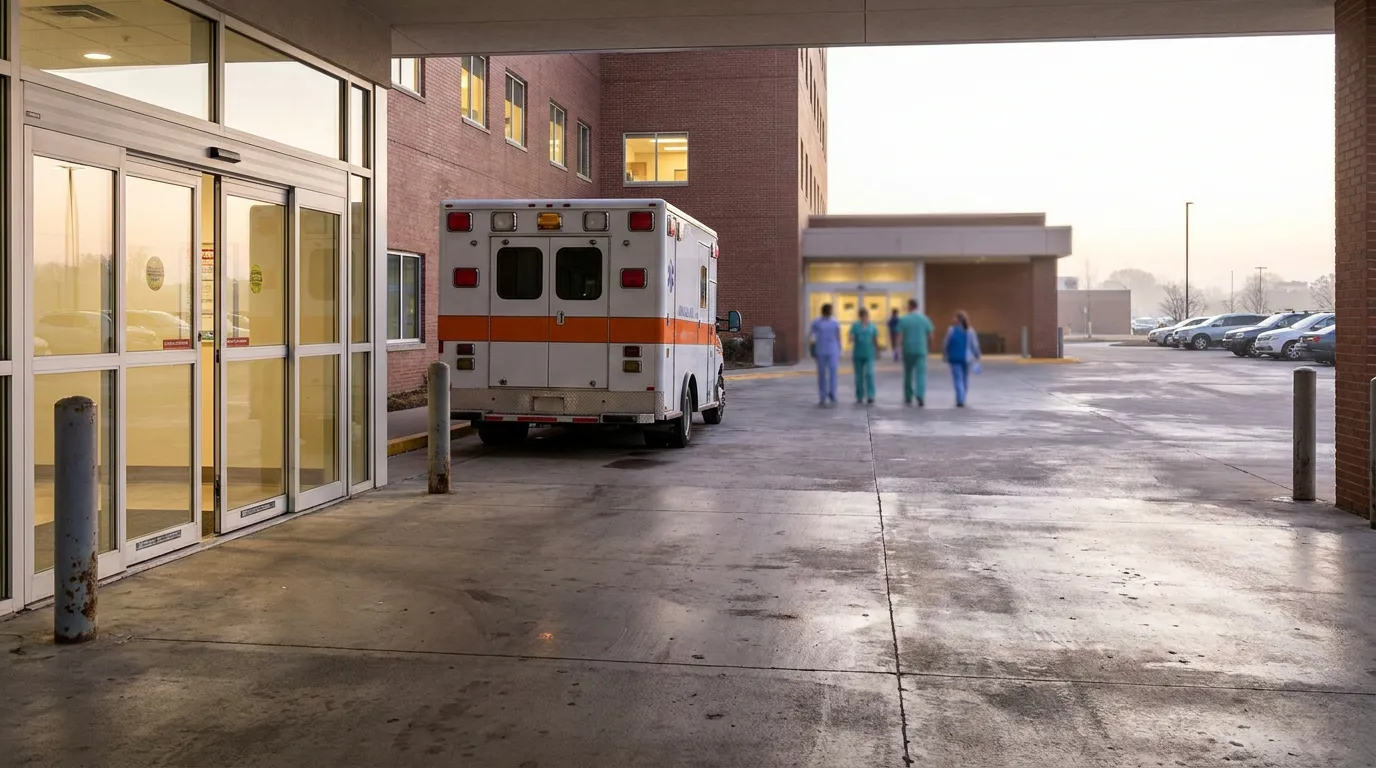
Sepsis rarely announces itself with a single obvious symptom. It often presents as fever, confusion, rapid heart rate, low blood pressure, or shortness of breath, findings that overlap with dehydration, the flu, anxiety, or intoxication. In a crowded Inland Empire emergency department, a triage nurse may score the patient as low acuity, and the clock starts running against them.
The most common failures our clients describe follow recognizable patterns in charts, triage notes, and discharge paperwork:
- Abnormal vital signs recorded at triage but never reassessed before discharge
- Lactate levels, blood cultures, or a complete blood count never ordered despite infection symptoms
- Broad-spectrum antibiotics delayed for hours after sepsis criteria were met
- A patient sent home with a "viral syndrome" diagnosis who returns in septic shock
- Failure to communicate critical lab values to the treating physician before discharge
💡 Pro Tip: Request the complete ER record, including triage vitals, nursing flow sheets, lab timestamps, and the medication administration record. Timestamps often tell the story more clearly than narrative notes.
The Legal Test Behind an Emergency Room Sepsis Misdiagnosis Claim
California generally treats a missed sepsis diagnosis as professional negligence, not ordinary carelessness. State court resources describe medical malpractice as occurring when a provider does not meet the standards of their profession and that failure causes harm. The standard is not perfection; it is what a reasonably careful provider in the same field would have done under similar circumstances. A diagnostic error alone is not automatically negligence.
Juries generally decide these cases under a specific instruction. Under CACI No. 500 medical negligence elements, a plaintiff must generally prove the defendant was negligent, the plaintiff was harmed, and the negligence was a substantial factor in causing that harm. In sepsis cases, the fight often centers on that third element, with defense counsel arguing the infection was already unsurvivable.
Proving Causation When Hours Mattered
Causation in a delayed sepsis diagnosis claim is typically built with retained medical opinion, not argument. Physicians in emergency medicine, infectious disease, and critical care reconstruct the timeline and explain what earlier intervention might have accomplished. Because causation must generally be shown to a reasonable medical probability, opinions framed only as a lost chance of a better outcome may not be sufficient alone. Courts and juries may weigh organ function at presentation, chart progression, and published treatment protocols, though outcomes remain highly fact-dependent.
Ordinary Negligence Versus Professional Negligence
Not every injury inside a hospital counts as malpractice. California courts distinguish professional negligence from general negligence based on whether the conduct was directly related to rendering professional medical services requiring skilled judgment. That line, examined in the Flores v. Presbyterian Intercommunity Hospital analysis, may determine which limitations period and procedural rules apply. A missed sepsis workup will often fall on the professional negligence side, though the analysis depends on circumstances.
When Records Do Not Match What Families Remember
Documentation disputes surface frequently in ER sepsis cases. Families recall a blood pressure reading or nurse’s comment absent from the chart. California identifies misrepresenting or falsifying patient care records as a distinct violation subject to licensing board discipline, separate from a civil damages claim but potentially relevant when evidence is contested.
Deadlines That Can End a Case Before It Starts
California generally requires a medical malpractice lawsuit to be filed within three years of the date of injury or one year after the plaintiff discovers, or should have discovered, the injury, whichever occurs first. Because sepsis harm is often obvious immediately, the one-year discovery clock frequently controls. The three-year outer limit may be tolled in narrow circumstances, such as fraud, intentional concealment, or a non-therapeutic foreign body, and different rules apply to injured minors. No extension should be treated as automatic.
A separate procedural step generally applies before filing. California requires plaintiffs to serve health care providers with a Notice of Intent to Sue at least 90 days before filing. If that notice is served within the last 90 days of the limitations period, the deadline is generally extended by 90 days from service. The California statute of limitations guide explains that missing the applicable deadline may cost you the right to sue entirely. If a public hospital or district facility is involved, a government claim generally must be presented within six months of the injury before any lawsuit may proceed, distinct from the civil filing deadline.
| Issue | General California Rule |
|---|---|
| Malpractice filing deadline | Three years from injury or one year from discovery, whichever is first |
| Pre-suit notice | 90 days’ notice of intent to sue the provider; may extend a deadline falling within that window |
| Noneconomic damages (providers) | Capped by statute, collectively, per MICRA; amount depends on injury date and increases annually |
| Noneconomic damages (institutions) | Separately capped, collectively, per MICRA; amount depends on injury date and increases annually |
💡 Pro Tip: Write down dates while memory is fresh: the ER arrival time, who examined your loved one, what you were told at discharge, and when symptoms worsened. That timeline often becomes the backbone of a case.
How MICRA Shapes What a Sepsis Claim Is Worth
The Medical Injury Compensation Reform Act limits noneconomic damages in California malpractice actions. For claims arising on or after January 1, 2023, legislation enacted in 2022 replaced the long-standing $250,000 limit with higher caps that increase annually over a ten-year period, with separate schedules for wrongful death and non-death cases. In non-wrongful-death cases, liability for noneconomic losses against health care providers, collectively, is generally capped at the applicable statutory figure regardless of how many providers are named, and a separate cap generally applies collectively to health care institutions such as hospitals. That structure can matter when both an ER physician and the hospital are defendants, and the controlling figure depends on the date of injury.
Economic damages, however, are not subject to that cap. Lifetime medical care after amputation or dialysis dependence, home modifications, attendant care, and lost earning capacity are typically proven through records and life care planning, and may dominate the case for families facing decades of costs. To understand how failure to diagnose becomes malpractice, a similar standard-of-care framework generally applies across diagnostic error claims.
Emergency Care Immunity and Its Limits
California grants limited civil immunity to licensed providers who render emergency care in good faith and without compensation at the scene of an emergency. Under Health and Safety Code section 1799.102, "the scene of an emergency" does not include an emergency department, except that Business and Professions Code section 2395 extends limited immunity to hospital ERs during a medical disaster, a duly proclaimed state or local emergency under the California Emergency Services Act. This immunity does not apply in the event of a willful act or omission.
That limitation can be significant for many sepsis claims. Routine ER negligence in failing to diagnose sepsis, occurring outside a proclaimed emergency, is generally not shielded by these provisions. Whether any immunity argument succeeds depends on the specific facts, timing, and any applicable declarations in effect.
Building a Case Against a Hospital in the Inland Empire
Hospitals often defend these claims aggressively, so preparation generally begins immediately. Preserve every discharge instruction, prescription, and billing statement, and avoid recorded statements to a risk manager or insurer before speaking with counsel. Medical records can be requested formally, and early preservation letters may help prevent loss of audit trail data from electronic charting systems.
Severity often drives whether a claim is viable. Cases involving septic shock, multi-organ failure, limb loss, anoxic brain injury, or wrongful death may carry the damages necessary to justify the substantial cost of retained physician testimony. A sepsis misdiagnosis lawyer serving San Bernardino families can evaluate whether the chart may support the causation showing California law requires.
Frequently Asked Questions
1. How do I know if my case is ER negligence or just a bad outcome?
Bad outcomes happen even with careful treatment. The question is whether the ER team documented and acted on findings a reasonably careful provider would have acted on, a determination that generally requires physician review of the full record.
2. Can I bring a septic shock malpractice claim in California if my family member died?
In some cases, certain surviving family members defined by statute may pursue a wrongful death action, often alongside a survival claim brought by the estate. Wrongful death claims are subject to their own MICRA noneconomic damages cap, which differs from the cap in non-death cases, and applicable filing deadlines still apply. Prompt action is important.
3. What if the hospital says the infection was already too advanced?
This is a common defense in cases of sepsis missed in the ER. Plaintiffs typically respond with medical opinion testimony addressing the patient’s condition at presentation and what standard protocols might have achieved. The outcome depends heavily on the specific chart.
4. Does the 90-day notice requirement shorten my time to file?
Generally no, and it may extend the deadline if notice is served in the final 90 days of the limitations period. Even so, serving notice near the end of that period can create complications, so counsel generally recommends starting the process well before any deadline approaches.
5. Are both the doctor and the hospital responsible?
Potentially, and they are generally treated as separate defendant categories for noneconomic damages. Liability may depend on employment relationships, staffing arrangements, and whether institutional policies contributed to the hospital sepsis error.
Taking the Next Step After a Devastating ER Failure
A failure to diagnose sepsis in an emergency room can transform a survivable infection into permanent disability or an unimaginable loss. California law may provide a path forward through the medical negligence framework, but it is demanding, generally requiring proof of a breached standard of care, causation established by retained physicians, and strict compliance with filing deadlines and pre-suit notice rules. Every case turns on its own facts.
You should not have to sort through hospital records and legal deadlines while caring for someone who may never recover. The attorneys at Kampf, Schiavone & Associates focus on serious, life-changing injury claims for Inland Empire families. Call (909) 885-1522 or schedule your case review today before critical time limits pass.
Disclaimer: This content is for informational purposes only and is not legal advice. Every case is unique, and results may vary. Consult an attorney about your specific circumstances.