

When an Insurance Company Reviews Your Doctor’s Treatment Request
Key Takeaways: Utilization review (UR) is the mandatory process California employers and claims administrators use to decide whether a treatment your doctor requests is medically necessary, and it generally applies the same way to San Bernardino, Fontana, and Rialto claims. A non-physician reviewer may approve a request, but only a licensed physician competent to evaluate the specific clinical issues may deny, delay, or modify one, applying the Medical Treatment Utilization Schedule within compressed statutory timeframes under Labor Code § 4610. A denial, modification, or delay addresses one specific treatment request and doesn’t necessarily mean your claim was rejected. Injured workers may challenge an adverse UR decision through Independent Medical Review, a state-administered process with conflict-of-interest disclosure requirements and publicly reported overturn data. Because IMR is generally decided on the paper record, supplementing the file with objective findings, prior conservative care, and guideline-based reasoning can often be effective. UR disputes are also generally distinct from MPN second and third opinions and QME panel disputes, each following its own timeline and appeal path.
If your treating physician requested surgery, injections, or advanced imaging after a serious workplace injury and you received a letter denying or modifying that request, you may have encountered utilization review, the process employers or claims administrators use to determine whether requested treatment is medically necessary under California law. It applies statewide, so a San Bernardino warehouse worker, a Fontana construction laborer, and a Rialto hospital employee may all move through the same system, with the decision typically made by a reviewer who has never examined you, working from paper records and treatment guidelines.
If a utilization review denial has stalled care for a catastrophic back, spinal, or head injury, you should not navigate the appeal alone. The attorneys at Kampf, Schiavone & Associates have spent decades advocating for injured workers across the Inland Empire whose lives were permanently altered by workplace trauma. Call (909) 885-1522 or contact us now to discuss your options while your appeal deadlines are still open.
Why Every Employer Must Run a UR Program
Utilization review is generally not optional for employers or their claims administrators. Employers must establish a medical treatment utilization review process, either directly or through an insurer or contracted entity, for reviewing physicians’ treatment recommendations, per the Division of Workers’ Compensation’s guidance on the utilization review process. Labor Code § 4610 establishes this framework.
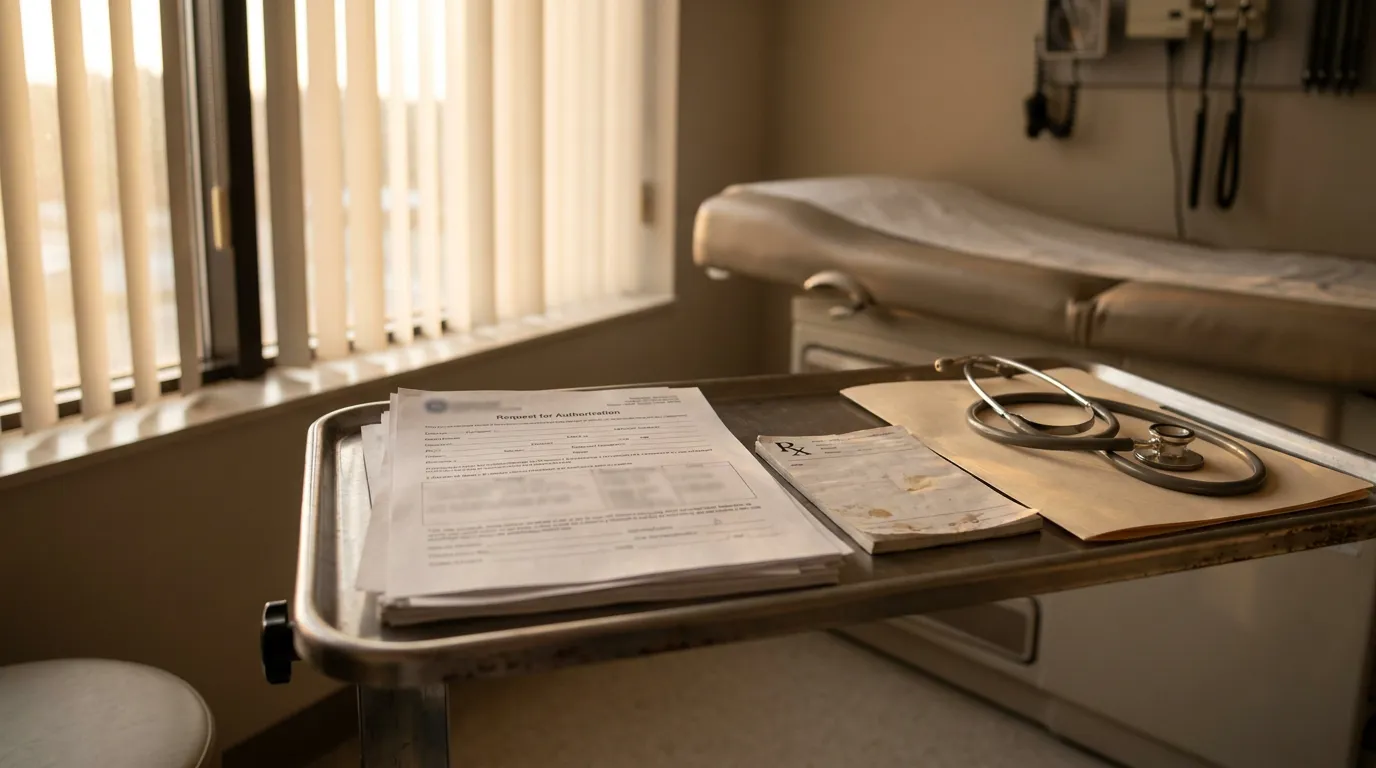
Practically, your doctor cannot simply order a lumbar fusion or neurostimulator and have it happen. A request for authorization is submitted, and the claims administrator routes it into UR. Only after approval does treatment generally proceed, subject to exceptions like emergencies and, for injuries on or after January 1, 2018, specified treatment within the first 30 days by an MPN or health care organization physician, which is generally exempt from prospective UR but may still be reviewed retrospectively.
Who Actually Makes the Decision
A non-physician reviewer may approve a treatment request, but only a licensed physician competent to evaluate the specific clinical issues may deny, delay, or modify one. Under Labor Code § 4610, prospective or concurrent decisions are generally made within five business days of receiving necessary information, and no more than 14 days from the request; expedited review applies within a shorter period where the employee’s condition could seriously jeopardize life, health, or recovery of function. These compressed timelines are one reason incomplete documentation can produce an adverse outcome.
Reviewers generally apply the Medical Treatment Utilization Schedule, which is presumed correct on extent and scope of treatment, though rebuttably. When records don’t document failed conservative care, objective imaging, or functional deficits, the reviewer may find the request unsupported even when your physician believes surgery is urgent.
Understanding a Utilization Review Denial Workers Comp California Claims Face
A denial letter is generally a medical necessity determination, not a finding that your injury is fake or unrelated to work. A utilization review denial workers comp California injured workers receive addresses one specific treatment request at a particular moment; your claim may remain accepted while individual requests are modified or denied.
Denials commonly arrive in three forms:
- Denial, the requested treatment is found not medically necessary
- Modification, a reduced version is approved, such as fewer therapy sessions
- Delay, the reviewer requests additional information before deciding
Each outcome carries its own appeal path and timing. An IMR application generally must be filed within 30 days of service of the UR decision, and missing that window may leave the determination in place for the statutory period, subject to limited exceptions such as a documented change in your condition.
💡 Pro Tip: Ask your treating physician for a copy of the request for authorization and supporting report the same day it’s submitted. If a treatment authorization denial follows, you’ll already have the documentation needed to evaluate what the reviewer did and didn’t consider.
How Independent Medical Review Challenges a UR Decision
When UR denies, delays, or modifies a treatment request, the injured worker may appeal through Independent Medical Review, a separate state-administered process. IMR is not handled by the insurance carrier, it’s an independent check on the denial, with conflict-of-interest safeguards built into the statute. IMR is generally the exclusive route for challenging medical necessity; a WCAB appeal of an IMR determination is limited to narrow grounds such as fraud, conflict of interest, or the administrative director exceeding powers.
Independent review organizations must disclose to the state the percentage of revenue they receive from expert reviews, including UR, and identify any workers’ compensation insurer, claims administrator, or provider group for which they provide review services, under Labor Code § 139.5(d)(2)(E). These obligations exist because the appeal’s credibility can depend on the reviewer’s independence from the carrier that issued the denial.
Outcomes are also tracked publicly. Labor Code § 138.8(a)(7)-(8) requires the administrative director to publish provider-level data showing how many UR decisions modified or denied treatment based on medical necessity, and how many IMR decisions overturned those determinations. This data may offer context on reversal frequency, though individual results depend on the medical record.
What Strengthens an IMR Appeal
The IMR reviewer generally decides on the documents, so the documents are often the case. One effective step may be having your treating physician supplement the record with objective findings, prior treatment history, and a clear explanation of how the request aligns with guidelines. Vague narrative reports rarely overcome a guideline-based denial.
Injured workers with spinal fusions, traumatic brain injuries, or crush injuries requiring staged surgical care may face repeated review of each treatment phase. Understanding the broader framework of California workers’ comp laws may help you anticipate where denials tend to occur in a long-term treatment plan.
Distinguishing UR Denials From MPN and QME Disputes
Not every medical dispute in your claim runs through utilization review. Confusing these tracks can cost injured workers time.
| Dispute Type | What It Addresses | General Path |
|---|---|---|
| UR denial | Medical necessity of a treatment request | Independent Medical Review |
| MPN treatment dispute | Disagreement with the network doctor’s diagnosis or plan | Second and third opinions in network |
| Medical-legal dispute | Causation, disability, apportionment | QME panel evaluation |
Under Labor Code § 4616.3(c), if an employee disputes the treating physician’s diagnosis or treatment, the employee may seek a second opinion from another MPN physician, and if disputed again, a third opinion within the network.
Panel Timing in Medical-Legal Disputes
Panel disputes generally follow their own statutory clock, separate from the UR and IMR process. Under Labor Code § 139.2(h)(1), governing panel requests by an unrepresented employee or employer under § 4062.1, the medical director must assign three-member QME panels within five working days of a request, prioritizing unrepresented employees. If no panel is assigned within 20 working days, the employee may obtain an evaluation from any qualified evaluator within a reasonable geographic area. Represented employees generally proceed under Labor Code § 4062.2, with its own request and striking procedure.
These administrative processes are generally distinct from a civil lawsuit. Workers’ compensation is an exclusive remedy against the employer, though exceptions and third-party claims may exist depending on the facts.
Regulatory Change and Legislative Scrutiny of UR
California continues to revise the rules governing utilization review. The DWC has advanced formal rulemaking on proposed utilization review regulations, including official rule text, notices, and public comment materials. Since UR is governed at the state level rather than by county rules, changes generally apply uniformly to San Bernardino claims.
The Legislature has also examined UR practices directly. SB 636 from the 2023-2024 session would have required, for private employers, that physicians who modify or deny treatment requests be licensed in California, but the bill was vetoed by the Governor in September 2024 and did not become law. Under current law, claims administrators may generally use physicians licensed in other states, provided the reviewer is competent to evaluate the clinical issues. This ongoing scrutiny reflects a recognized tension between cost containment and timely access to care.
💡 Pro Tip: Keep a dated log of every treatment request, denial letter, and gap in care. For workers with permanent impairment, documented treatment delays may become relevant evidence regarding recovery and long-term medical needs.
Frequently Asked Questions
1. Does a UR denial mean my whole claim was rejected?
Generally no. A UR decision addresses medical necessity for a specific request. Claim denial, concerning whether the injury is compensable at all, is generally a separate determination.
2. Can I pay out of pocket and seek reimbursement later?
That approach may carry real risk. Reimbursement for self-procured care is fact-dependent and not assured, particularly where the treatment was denied through a properly conducted review.
3. How long does a UR denial stay in effect?
Under Labor Code § 4610, a decision to modify or deny a treatment request generally remains effective for 12 months from the decision date without further review, unless there’s a documented change in your condition or new facts supporting a renewed request.
4. What if the reviewer never saw my MRI or surgical consult?
Incomplete records are a common problem. If material documentation was missing, your physician may resubmit with the complete record, and the omission may be raised in the IMR appeal. Where a UR decision is untimely or otherwise materially defective, the medical necessity dispute may in some circumstances be decided by the WCAB rather than through IMR.
5. Do I need an attorney for an IMR appeal?
You are generally not required to have one. However, workers facing spinal surgery, brain injury care, or lifetime treatment needs may benefit from representation, since the record built now can potentially affect permanent disability and future medical awards.
Protecting Access to Care After a Life-Altering Injury
Utilization review exists to test medical necessity, but for a worker with a fractured spine, a traumatic brain injury, or a catastrophic construction fall, a denial can mean months without the surgery that may determine whether you ever work again. The system generally provides appeal rights through IMR, statutory timeframes, and public reporting of denial and overturn rates. Using those tools effectively may depend on a thorough, well-documented medical record and on acting before deadlines close. Outcomes always depend on the specific facts of your case.
You do not have to accept a denial letter as the final word on your medical care. A San Bernardino utilization review attorney at Kampf, Schiavone & Associates can review your denial, your medical record, and your appeal options. Reach the firm at (909) 885-1522 or through the online case review form to get answers about denied medical care in your workers’ comp claim.
Disclaimer: This content is for informational purposes only and is not legal advice. Every case is unique, and results may vary. Consult an attorney about your specific circumstances.