

The Two-Year Limit Most Injured Workers Hit, and the Narrow Exception That Changes Everything
Key Takeaways: Most California workers are limited to 104 weeks of temporary disability benefits within five years of the date of injury under Labor Code § 4656(c)(2), but a narrow exception in § 4656(c)(3) extends that period to 240 compensable weeks for workers with specific enumerated injuries: amputations, severe burns, high-velocity eye injuries, chemical eye burns, HIV, acute and chronic hepatitis B and C, pulmonary fibrosis, and chronic lung disease (for injuries on or after April 19, 2004). Severe spinal and traumatic brain injuries are not listed and generally remain capped at 104 weeks. Temporary disability pays roughly two-thirds of lost pre-tax wages, subject to statutory limits, and can stop early when you return to work or reach maximum medical improvement. Disputes commonly turn on how medical evidence characterizes the injury, making thorough documentation critical.
If you have been off work for months after a catastrophic workplace injury, you have probably heard that temporary disability benefits run out after 104 weeks. That is the general rule under California Labor Code § 4656(c)(2) for injuries occurring on or after January 1, 2008. A narrow group of severely injured workers, however, qualifies for an extended benefit period of 240 compensable weeks. That exception, found in Labor Code § 4656(c)(3), applies only to specific enumerated injuries such as amputations, severe burns, high-velocity eye injuries, chemical eye burns, HIV, acute and chronic hepatitis B and C, pulmonary fibrosis, and chronic lung disease, for injuries occurring on or after April 19, 2004.
If your injury may fall within that list, the stakes are enormous, and the difference between two years and nearly five years of wage replacement can determine whether your family stays afloat. The attorneys at Kampf, Schiavone & Associates have spent decades standing up for Inland Empire workers whose lives were permanently altered on the job. Call (909) 885-1522 or contact us now for a confidential discussion of your claim.
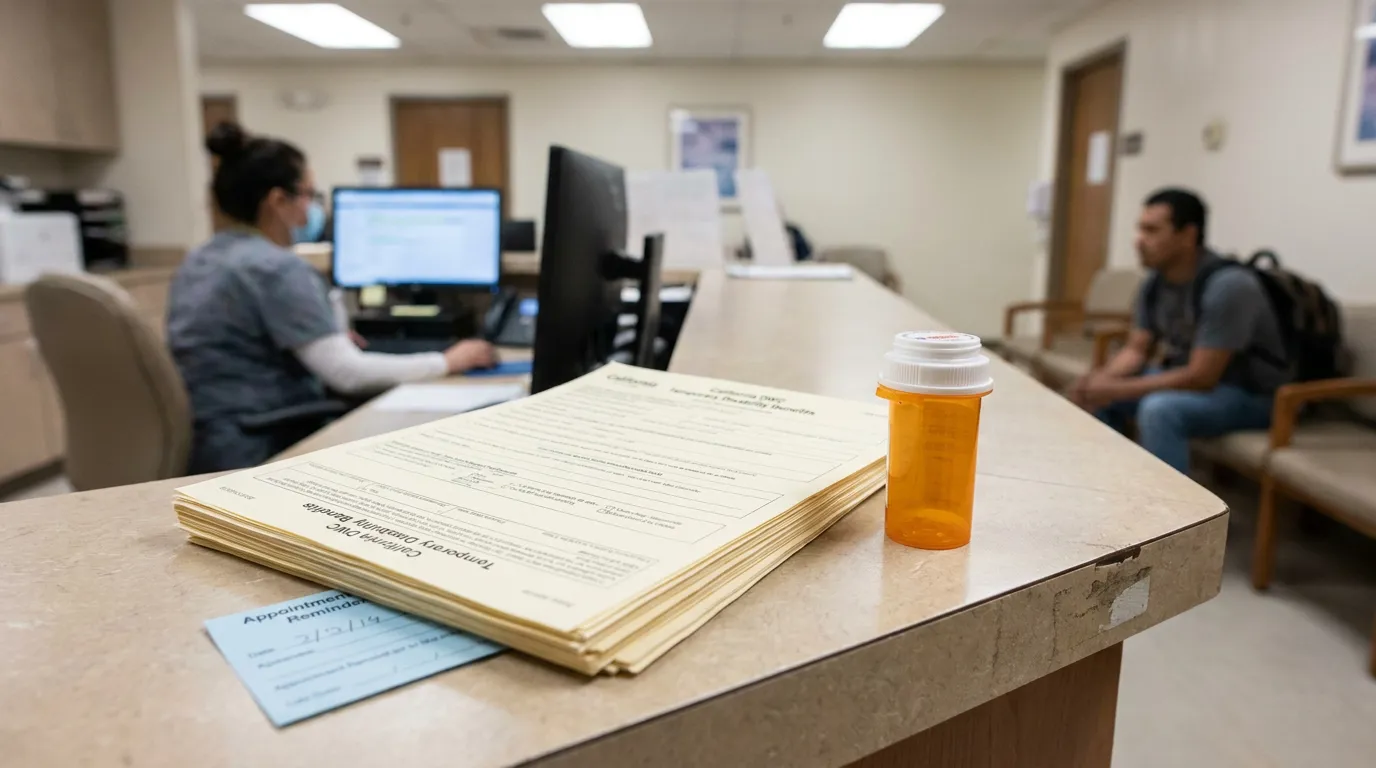
What Temporary Disability Actually Pays While You Recover
Temporary disability is wage replacement, not a settlement. Under California law, temporary disability generally pays two-thirds of the gross, pre-tax wages you lose while recovering from a job injury, subject to statutory minimum and maximum weekly amounts adjusted annually. Higher earners often receive less than two-thirds of their actual wages due to the statutory maximum. These payments are generally not subject to income tax and have no payroll deductions, which surprises many workers. You can review the state’s official explanation of temporary disability benefits published by the Division of Workers’ Compensation.
Payments typically begin after a three-day waiting period, once a physician certifies that you cannot perform your usual job. The waiting period does not apply if you are hospitalized overnight or your disability lasts more than 14 days. Benefits are then generally paid every two weeks. TD is available to workers with accepted claims who are kept off work entirely, or who have work restrictions the employer cannot accommodate.
Temporary Total Versus Temporary Partial Disability
California recognizes two categories of temporary disability: temporary total disability (TTD) and temporary partial disability (TPD). TTD applies when you cannot work at all during recovery. TPD applies when you return to reduced hours or lighter duty at lower earnings, and the carrier pays a portion of the wage difference. Both categories count toward the compensable-week limits, making careful tracking important in long-recovery cases. For a deeper walkthrough of how these payments function, a closer look at temporary disability benefits covers the mechanics in detail.
💡 Pro Tip: Keep a personal log of every TD check, its date, and the period it covers. Carriers occasionally miscount compensable weeks, and your own records may be the fastest way to spot an error before benefits are wrongly cut off.
How Labor Code 4656 240 Weeks Works in Practice
The 240-week rule is an exception, not a default. Labor Code § 4656(c)(3) states that for enumerated injuries occurring on or after April 19, 2004, aggregate disability payments shall not extend for more than 240 compensable weeks within five years from the date of injury. The statutory text of Labor Code section 4656 sets out both caps side by side.
Two conditions must be satisfied before the extension applies. First, the medical evidence must establish that your condition falls within one of the enumerated categories. Second, for injuries on or after January 1, 2008, both the 104-week and 240-week caps are measured within a five-year window from the date of injury. Whether a particular diagnosis fits an enumerated category is often fact-dependent and can become the central dispute.
| Benefit Limit | Statutory Basis | Applies To | Measuring Window |
|---|---|---|---|
| 104 compensable weeks | Lab. Code § 4656(c)(2) | Most injuries on or after 1/1/2008 | Five years from date of injury |
| 240 compensable weeks | Lab. Code § 4656(c)(3) | Enumerated severe injuries on or after 4/19/2004 | Five years from date of injury |
Which Qualifying Injuries the Statute Lists
The enumerated conditions are specific, and courts generally read statutory lists narrowly. Under Labor Code § 4656(c)(3), the categories include:
- Acute and chronic hepatitis B and hepatitis C
- Amputations
- Severe burns
- HIV
- High-velocity eye injuries and chemical burns to the eyes
- Pulmonary fibrosis and chronic lung disease
A crushing forklift injury that results in amputation, a chemical exposure at an Inland Empire warehouse, or a burn from an industrial fire may fall within these categories, depending on the medical findings. A severe spinal injury or traumatic brain injury, however serious, is not listed and those workers typically remain subject to the 104-week cap.
Why Benefits Can Stop Long Before You Reach Any Cap
Reaching 104 or 240 weeks is a ceiling, not a promise. Temporary disability generally stops when you return to work, when the treating physician releases you to work, or when your condition reaches maximum medical improvement (MMI) or permanent and stationary status. Many seriously injured workers reach MMI well before the statutory maximum, and TD ends at that point regardless of how many weeks remain.
Other status-based rules can also interrupt eligibility. For example, Labor Code § 3370(a)(2) provides that an inmate shall not be entitled to temporary disability indemnity benefits while incarcerated in a state prison. Entitlement depends on qualifying status and timing, not on the injury alone.
What Happens After Temporary Disability Ends
When TD concludes and the injury leaves permanent partial disability, additional benefits may come into play. Under Labor Code § 4658.7, for injuries on or after January 1, 2013, an injured worker with permanent partial disability may be entitled to a supplemental job displacement voucher valued at up to $6,000 for retraining, unless the employer makes a timely offer of qualifying work lasting at least 12 months.
Permanent disability indemnity and future medical care are usually where the long-term financial value of a catastrophic claim lies. Workers who lose a limb, suffer disfiguring burns, or develop chronic lung disease often face permanent loss of earning capacity and years of treatment. Building that record early, through consistent medical documentation and credible reporting, tends to matter far more than any single argument about week counts.
💡 Pro Tip: If an adjuster tells you benefits are ending because you have hit the cap, ask in writing for a week-by-week accounting. Under certain circumstances, weeks that were never actually compensable should not count against the limit.
Common Obstacles San Bernardino Workers Face
Disputes over the 240-week extension usually turn on medical characterization. A carrier may concede a serious burn but argue it was not "severe" within the meaning of the statute, or may dispute whether a lung condition qualifies as chronic lung disease. These are fact-sensitive questions that the Workers’ Compensation Appeals Board may resolve differently depending on the medical record.
Delays in reporting and gaps in treatment can quietly undermine an otherwise strong claim. Prompt reporting to your employer, generally within 30 days of the injury, consistent attendance at appointments, and clear documentation of restrictions all strengthen the evidentiary foundation. When a qualified medical evaluator’s findings conflict with your treating physician, challenging that report through proper procedural channels may be necessary.
Working with a labor code 4656 240 weeks lawyer early can help preserve arguments that are difficult to raise later. Injured worker eligibility questions rarely resolve themselves, and outcomes always depend on the specific facts, medical evidence, and timing of each case.
Frequently Asked Questions
1. Does every serious injury qualify for 240 weeks of temporary disability?
No. The severe injury exception in Labor Code § 4656(c)(3) applies only to the conditions the statute enumerates. Many devastating injuries, including spinal and head injuries, generally remain subject to the 104-week limit.
2. Do the 240 weeks have to be consecutive?
Generally no. The statute counts compensable weeks, meaning weeks in which benefits were actually payable, but for injuries on or after January 1, 2008 all must fall within five years from the date of injury.
3. What if my employer offers modified work I physically cannot perform?
If the offered work exceeds your medical restrictions, temporary disability may continue. Documentation from your treating physician describing the specific limitations is typically central to that dispute.
4. Can I receive temporary disability and permanent disability at the same time?
Generally no for the same period of the same injury. Permanent disability indemnity typically begins after temporary disability ends, once you reach maximum medical improvement.
5. What happens if my claim is denied outright?
A denial can halt TD payments, although the employer must still authorize up to $10,000 in medical treatment while the claim is investigated. Injured workers may challenge a denial by filing before the appeals board, and doing so promptly is important because of applicable filing deadlines.
Protecting Your Income After a Life-Altering Workplace Injury
The 240-week TD extension exists because California lawmakers recognized that certain catastrophic injuries do not heal on a two-year schedule. If you suffered an amputation, severe burns, a chemical eye injury, or a chronic occupational lung disease, you may be among the narrow group entitled to that extended benefit period. But qualifying requires precise medical evidence, correct timing from the date of injury, and a willingness to push back when a carrier reads the statute narrowly.
You should not have to fight an insurance company while recovering from an injury that changed your life. Kampf, Schiavone & Associates represents Inland Empire workers facing permanent disability, lost earning capacity, and years of medical care. Call (909) 885-1522 or request your consultation today.